Roles & Responsibilities of Scientists
|
Engaged scientists
Lubchenco is widely recognized for promoting the concept of ‘a social contract' in which scientists have an obligation to engage with society to pursue and share knowledge that is relevant to society’s most pressing problems or to actively support their colleagues and students who do so. Moreover, all should act with transparency, honesty and humility. https://science.sciencemag.org/content/279/5350/491 In the 20+ years since she proposed this idea, individual scientists have risen to the challenge and become much more effective communicators and partners with society. But significant barriers within academia prevent even more effective utility to society. https://dx.doi.org/10.1088/1748-9326/abba9c |
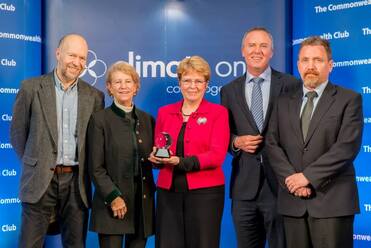
Dr. Lubchenco recieving the Schneider Climate Communication Award, 2014
|
As the 'post-truth world loomed in 2016 and beyond, Lubchenco laid out a roadmap for scientists to be more effective and helpful
https://dx.doi.org/10.1088/1748-9326/abba9c
In the late 1980s' Lubchenco led the Ecological Society of America on its journey of self-discovery to begin to understand, communicate, and prioritize its relevance to society -- to help provide the knowledge needed for a just, equitable, and sustainable world.
https://esajournals.onlinelibrary.wiley.com/doi/abs/10.2307/2937183
Whole Scientists
Jane believes in striving for a rich, balanced life. For example, she and her husband pioneered a novel dual-career arrangement that enabled each to work part-time so both could be active teachers, researchers, and engaged parents at a time when decent daycare was unavailable. https://www.jstor.org/stable/pdf/1312127.pdf?refreqid=excelsior%3Af30ac4419fdfe99a96536a40bd9078f0
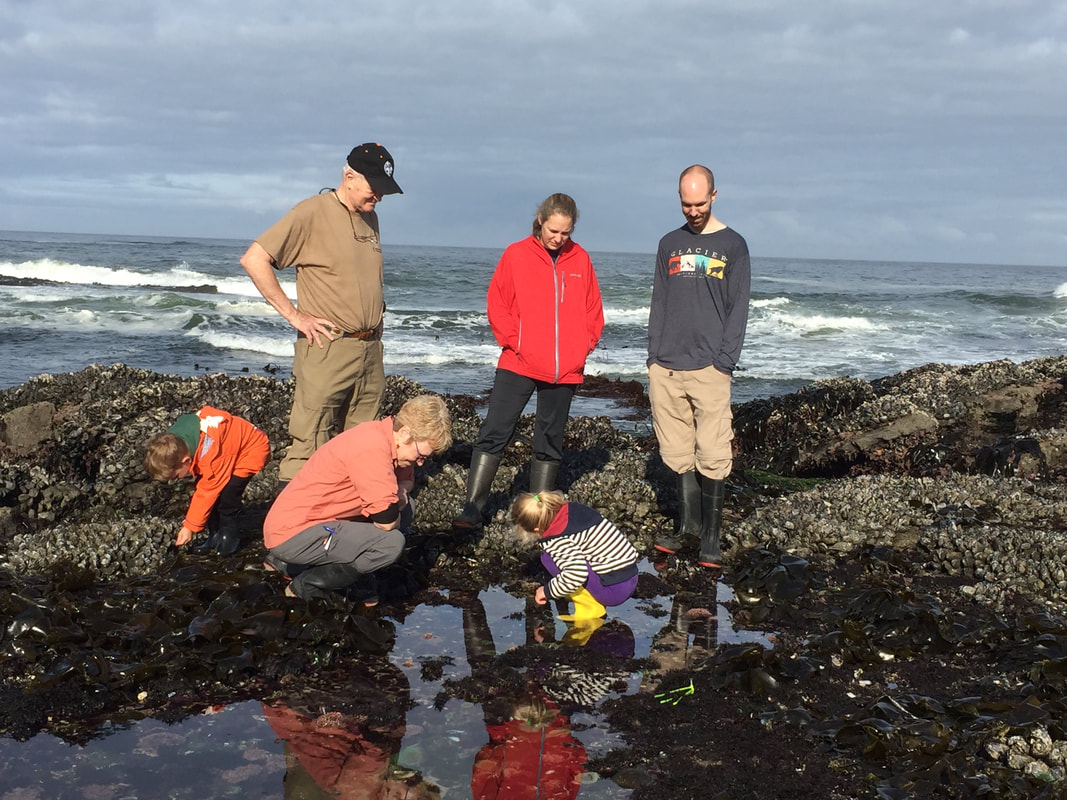
Three generations of the Lubchenco-Menge family exploring Oregon's rocky shores. Jule Gilfillan, Oregon Public Broadcasting.